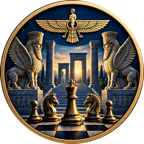
On the board: the Lucena position, king, rook and pawn against rook. Know it and you win the most common ending.
Endgame · technique · knowledge
In the end, technique counts.
Once most pieces are traded, exact knowledge decides. chessophia shows the positions you must know, with their verdict – win or draw – and the way there.
Owl's eye
White to play and winWhite to move. Click a piece, then its target square – or drag it.
Study by Georges Barbier and Fernando Saavedra, Glasgow 1895
Principles
8 positions you must know.
Each basic position with its verdict in the result colours. Sometimes it only depends on who is to move.
Win Draw
Opposition
White to move: Draw Black to move: White wins The kings face each other with one square between them. Whoever must move gives way. Key1…♔d7 2.♔f6 To the lesson →Rule of the square
White to move: White wins Black to move: Draw If the king is inside the pawn's square it catches it. Otherwise the pawn runs through. Key1.b6 To the lesson →Lucena position
White to move: White wins The rook builds a bridge to shelter the king from side checks. The key winning position in rook endings. Key1.♖d1+ ♔e7 2.♖d4 To the lesson →Philidor position
Black to move: Draw Black's rook holds the 6th rank. Once the pawn advances, it checks from behind. KeyRook on the 6th rank To the lesson →Vančura position
Black to move: Draw Against the rook pawn the rook attacks from the side and pins the pawn down. KeyRook on the side, f6 To the lesson →Réti manoeuvre
White to move: Draw The king chases two goals at once: catch the h-pawn and support its own c-pawn. Study by Richard Réti, 1921. Key1.♔g7 h4 2.♔f6 To the lesson →Rook checkmate
White to move: White wins King and rook push the king to the edge rank by rank. Required from the first lesson. KeyShrink the box To the lesson →Bishop and knight mate
White to move: White wins The hardest basic mate: it only works in the corner the bishop controls. KeyDelétang's triangle To the lesson →The verdicts are established endgame theory. Stockfish's evaluations follow.
Trainer · techniques · levels
Practice by technique and level.
30,064 positions from real games in which exactly one move wins or holds – checked with the tablebase. Start with all of them, with a goal, with a technique or with your level.
Endgame tree · the families
Where the games lead.
524,062 of our games reached an endgame – 46 % of all games. Each family shows how often it arises and how it ends.
White winsDrawBlack wins
Big 4 · Stockfish at the start of the endgame
The great ones in the endgame.
Stockfish 19 rated every one of their endgames at the moment it began (depth 24). This shows who got the most out of equal positions.
Collections · from real games
Positions that tell a story.
Where a game turned, who found the same move and who did not, why a game was resigned – and how the great ones played their endgames.
Explore · statistics
The endgames in numbers.
What the endgame finder found in our games – every bar leads to its positions in the trainer.
Positions per family
Players with the most positions
Openings with the most positions
For you · My endgames
Your endgames under the magnifier.
Load your games as a PGN file: chessophia finds the endgames in them – with the same rule as in our databases – and shows in which endgames you lose points.
The file never leaves your browser: it is only read here and stored nowhere.
- IChoose a PGN file with your games, or drop it here.
- IIGive your name as it stands in the games – then your points count.
- IIISee in which endgame family you lose the most, and look at every position on the analysis board.
The emblem
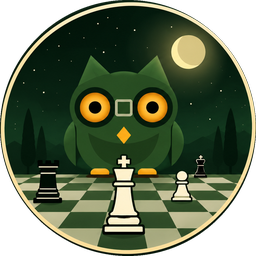
Two kings, one square between.
The owl's eyes are two kings in opposition. The small square between them is the square fought over in pawn endings.
Sophia means wisdom. The owl sees in the dark, waits calmly and strikes at the right moment – like good endgame technique.
The family